Asahi's Premium Gin Play: A Blueprint for Emerging Market Consumer Trends
Japanese beverage giant Asahi Breweries is poised to introduce an Australian premium gin to the Japanese market, a move that highlights a broader global shift towards higher-value consumer goods and strategic brand partnerships.

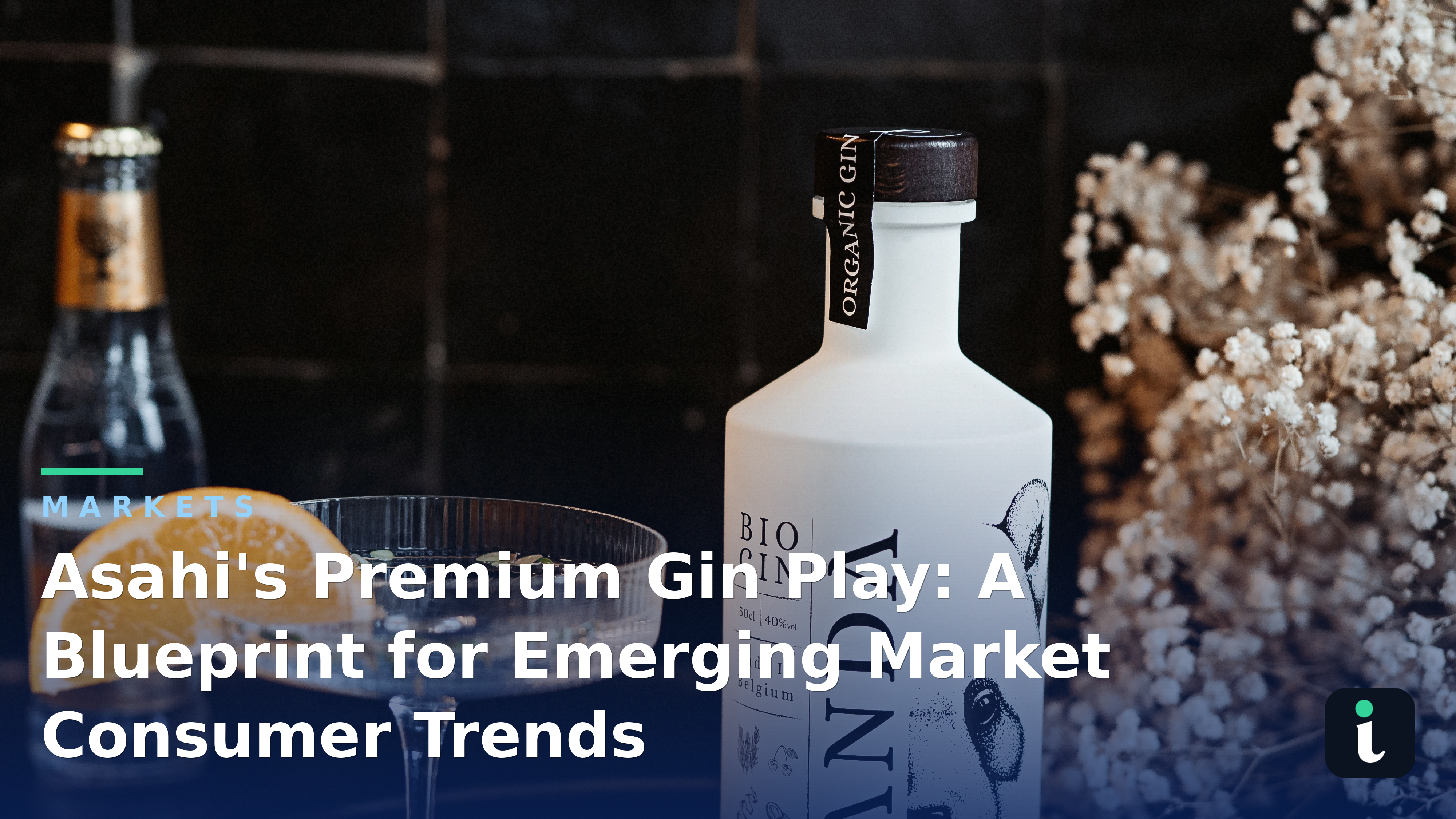
The single most striking figure here isn't a number at all, but a strategy: Asahi Breweries' decision to begin selling premium gin made by an Australian brand in Japan on Wednesday. This isn't just about a new drink; it's about a major beverage player recognizing and acting on a global shift in consumer demand towards high-end products, a trend with echoes far beyond Tokyo.
Asahi Taps New Markets: Diversifying Beyond Beer
Asahi's move to introduce Never Never Distilling's Triple Juniper Gin in Japan marks a clear strategic pivot. For decades, Asahi has been synonymous with beer, particularly its Super Dry brand. Yet, the company is now actively cultivating Japan's premium gin market. This isn't a defensive play; it's an offensive one, seeking to capitalize on growing demand for spirits that offer a perceived higher quality or unique experience. This diversification is a common strategy for established companies looking to maintain growth in mature markets, or to capture new, more profitable segments. For consumers, it means more choice, but also a signal that producers are willing to invest in niche, high-margin products.
The Export Ambition: If Local Effort Pays Off
Crucially, Asahi isn't just focused on Japan. The company looks to export to the US, Europe and elsewhere if the local effort pays off. This tells us a few things. First, the Japanese market is being used as a testbed for a potentially much larger global rollout. If Japanese consumers embrace this premium gin, Asahi has a blueprint for expansion. Second, it highlights the global nature of premiumization. The demand for higher-end spirits isn't confined to wealthy Western markets; it's a trend that can be observed in emerging economies too. For African markets, this could mean that if Asahi's strategy proves successful, we might see similar premium product launches, potentially shifting local consumption patterns and offering new opportunities for importers.
Growing Demand for High-End Gin: A Global Phenomenon
Asahi's move is explicitly motivated by growing demand for high-end gin. This isn't a sudden surge; it's the continuation of a trend seen over the last decade. Consumers globally are increasingly willing to pay a premium for craft spirits, often driven by a desire for authenticity, unique flavor profiles, and a perception of quality. This contrasts with the mass-market consumption of traditional alcoholic beverages. For a Nigerian saver, for instance, this trend might mean that local distillers could find a lucrative niche in producing their own premium spirits, rather than competing solely on price with established brands. The mechanism is simple: higher perceived value allows for higher margins.
Consider the market shift:
| Product Category | Traditional Focus | Emerging Focus |
|---|---|---|
| Beer | Volume, Mass Appeal | Craft, Specialty |
| Spirits | Standard Offerings | Premium, Artisan |
This table illustrates the broad shift. Asahi, by partnering with Never Never Distilling, is buying into the 'Premium, Artisan' segment, rather than trying to reinvent its core 'Volume, Mass Appeal' beer business. This allows them to capture a new, often more affluent, consumer base without diluting their existing brands.
What This Means for African Markets and the Naira
While this story originates in Tokyo, its implications stretch to Africa. The global shift towards premiumization, as exemplified by Asahi, could influence import and consumption patterns across the continent. For an importer in Lagos, this means keeping an eye on global consumer trends beyond just staple goods. If premium spirits become more sought after, it could open new avenues for business. However, it also means that the cost of importing such goods, often denominated in stronger currencies, could put pressure on the Naira. For example, if a premium gin costs $50 a bottle at import, with the USD/NGN at 1,363.13, that's already NGN 68,156.50 before duties and local margins. This high cost could limit market penetration but also create a very exclusive, high-margin segment.
The Counter-Argument: Niche vs. Mass Appeal
One could argue that premium gin remains a niche product, and Asahi's focus on it might distract from its core beer business, which still accounts for the vast majority of its revenue. The risk is that the investment in a relatively small market segment might not yield significant returns compared to bolstering their established brands. Furthermore, premium markets are often more volatile, sensitive to economic downturns, and subject to rapid shifts in consumer tastes. What's trendy today might be forgotten tomorrow. However, Asahi's strategy to test the waters in Japan first, with an eye on broader exports, mitigates this risk by allowing them to scale up only if the initial investment proves successful.
The Bottom Line
Asahi Breweries' strategic move into premium gin, starting in Japan, is a clear signal that global consumer demand is increasingly segmenting towards higher-value, specialized products. This trend, if successful, offers a blueprint for how major corporations are adapting to evolving tastes, with potential ripple effects for markets and consumption patterns, even in distant economies like those in Africa.
Sources: Nikkei Asia — Asahi taps Australian brand to cultivate Japan's premium gin market · SCMP Business — BlackRock taps Hong Kong stablecoins for new money market fund
For Information Purposes Only. Not Investment Advice. How we work

Iboro William
Iboro William is the founder and editor of Iboro Finance and the builder behind FolioStack, a family of money apps: Samba for airtime, data and bills with Bitcoin cashback, the FolioTrack portfolio tracker, the FolioTrade crypto trading bot and EkpadFile, unlimited cloud storage with watch parties that bring families and loved ones together.
A data analyst by profession, he works daily with SQL, Snowflake and Power BI, and brings the same habit to his writing: read the numbers first, then draw the conclusion.
He has written five books on crypto, money and personal discipline, read by about 15,000 people in 86 countries. On Iboro Finance he explains markets, the economy and crypto for readers in Nigeria, across Africa and in the diaspora.